Carbon Chicken is working toward an ambitious goal: becoming the first carbon-negative farm in Northwest Arkansas. Through regenerative agriculture, biochar production and innovative soil-building practices, the company is creating a model that could improve soil health and reduce their environmental impact.
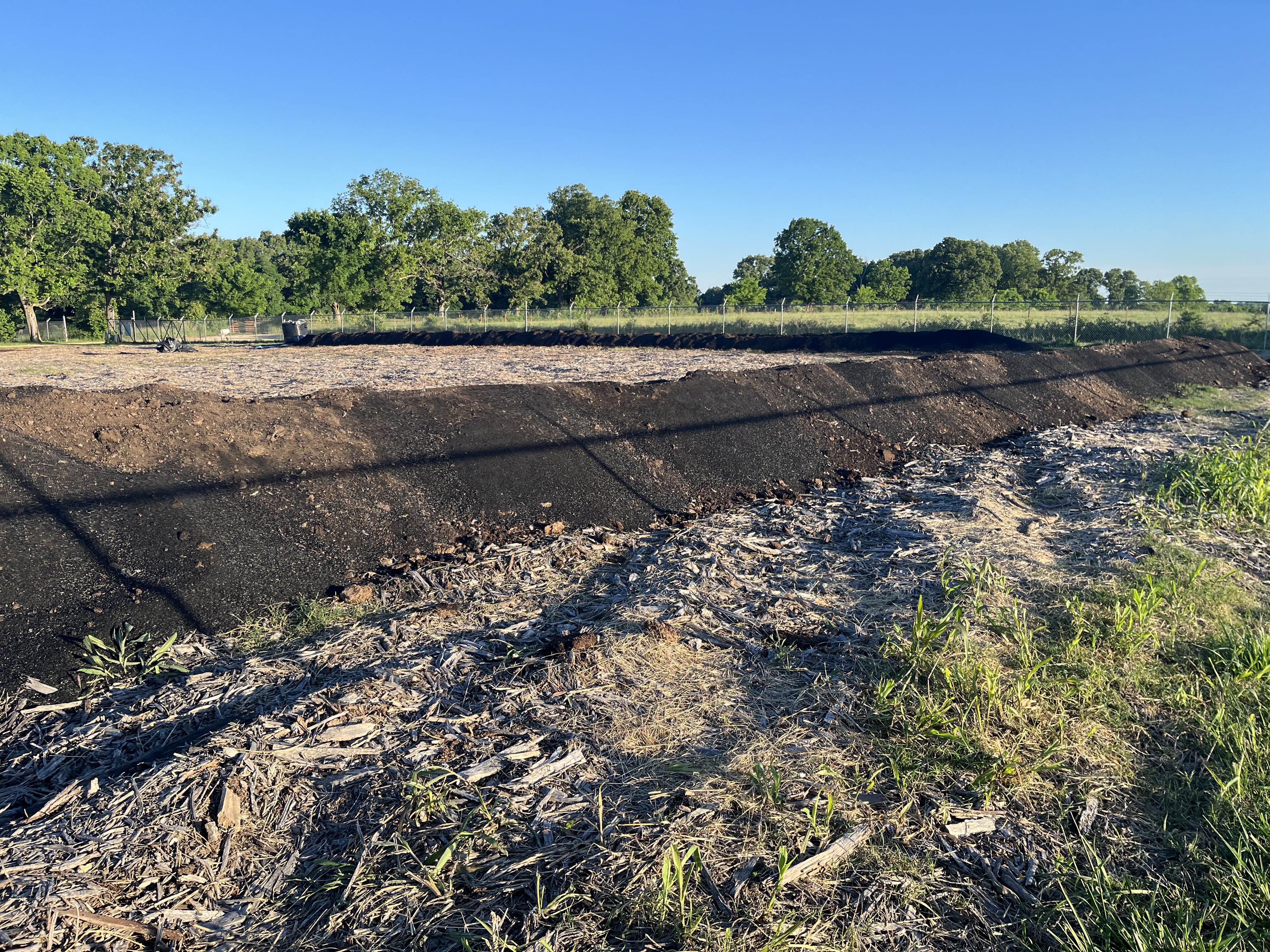
At the heart of the operation is a long-term effort to rebuild soil from the ground up. Following the Rogers tornado, Carbon Chicken brought in approximately 60 truckloads of wood chips that have served as a major carbon source. Combined with biochar, chicken litter and other organic materials, the wood chips are helping convert the farm’s soil from a bacterial-dominated system to a fungal-dominated one, creating rich, nutrient-dense black soil.
“I want to show how by bringing in enough Carbon, enough Biochar and enough chicken litter, I can create the richest soil known to man right here,” said Jody Hardin, CEO and Co-Founder of Carbon Chicken Project.
The results are already visible. Over the past three years, the original 18-inch layer of wood chips has broken down to roughly half its depth, with much of the material transformed into the fertile soil. This living soil now acts like a sponge, absorbing and retaining rainfall, reducing runoff and significantly decreasing irrigation needs.
While improving the land remains a priority, Carbon Chicken is also focused on building a sustainable business model. The farm continues expanding its presence at the Bentonville Farmers Market and is developing a Community Supported Agriculture (CSA) program in partnership with local farmers. These efforts support ongoing research while helping connect consumers directly with regenerative farming practices.
Looking ahead, Carbon Chicken envisions a circular agricultural economy built around poultry waste. Materials such as pullet litter and other poultry byproducts could be converted into biochar, reused as poultry bedding and eventually returned to the soil to grow grain for future flocks in a regenerative cycle. This closed-loop system has the potential to reduce pollution, improve soil health, sequester carbon and create new revenue opportunities through carbon credits.
The company represents more than a decade of research, experimentation and persistence. The concept first emerged around 2014, but founder Jody Hardin decided to wait until long-term USDA biochar studies began producing measurable results around 2021 before launching, allowing the company to build on a growing body of scientific validation. His work in biochar dates back even further, including involvement with what was later recognized as the first Natural Resources Conservation Service (NRCS) biochar grant in the United States in 2011.
Today, Carbon Chicken stands as the culmination of years of innovation and dedication. By combining practical farming, environmental stewardship and scientific research, the company is working to demonstrate how agriculture can be both economically viable and environmentally regenerative for future generations.